The Steps of Thangka
Canvas Preparation
Objective: To prepare a smooth, durable, and receptive surface for drawing and painting.
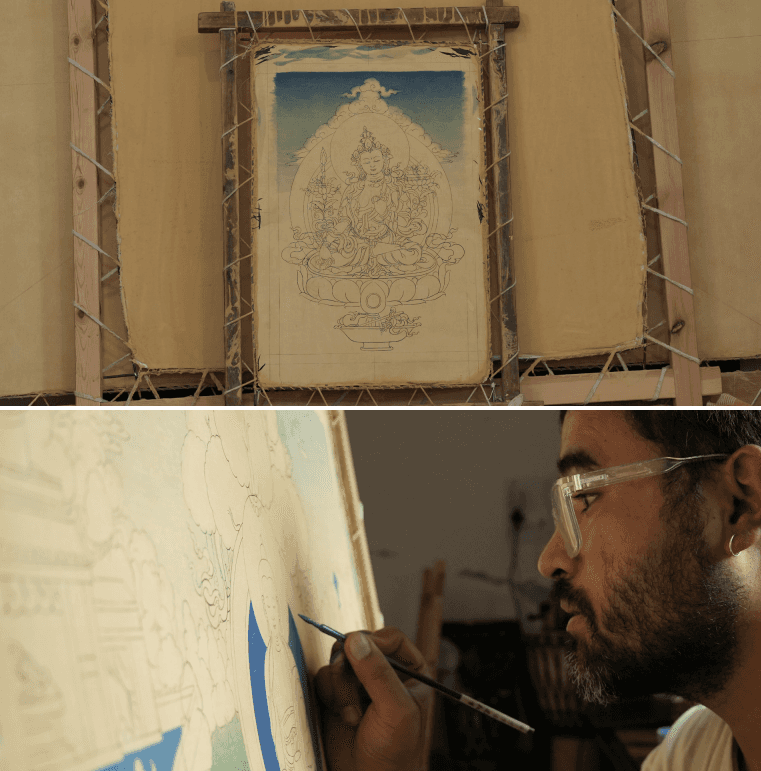
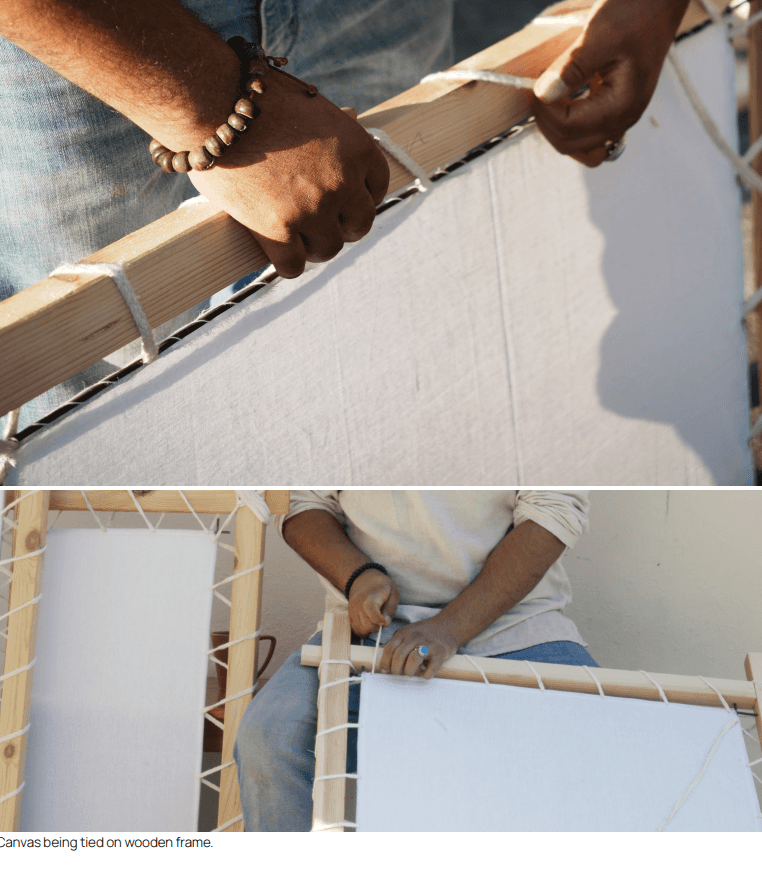
Framing the Canvas
Sizing the Surface
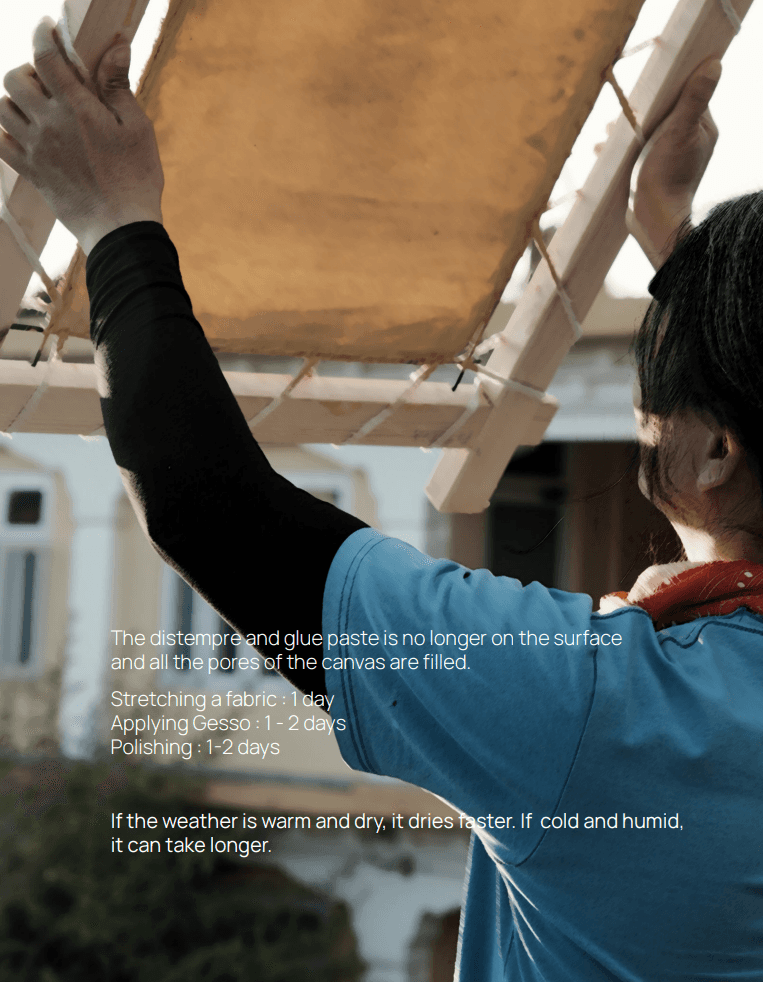
A mixture of animal-skin glue (often from yak or rabbit) and calcium carbonate powder (distemper) mixture is applied to the fabric called gesso. This serves to stiffen the canvas
and create a sealed surface.
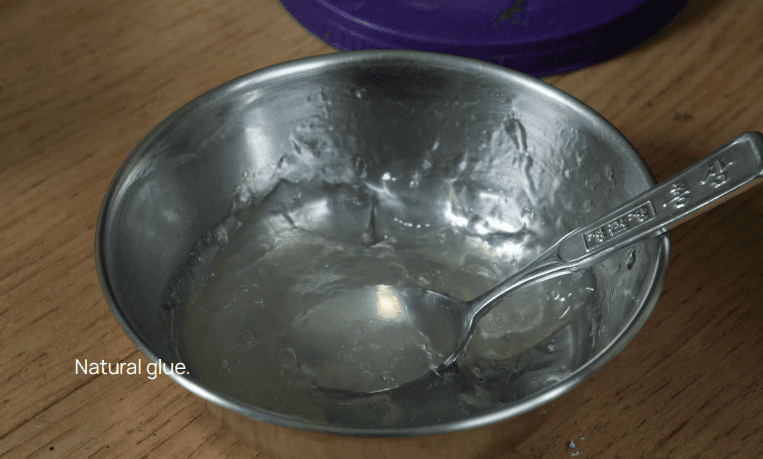
Tibetan artists traditionally made their own hide glue from animal skins, but modern artists often use store-bought glue.
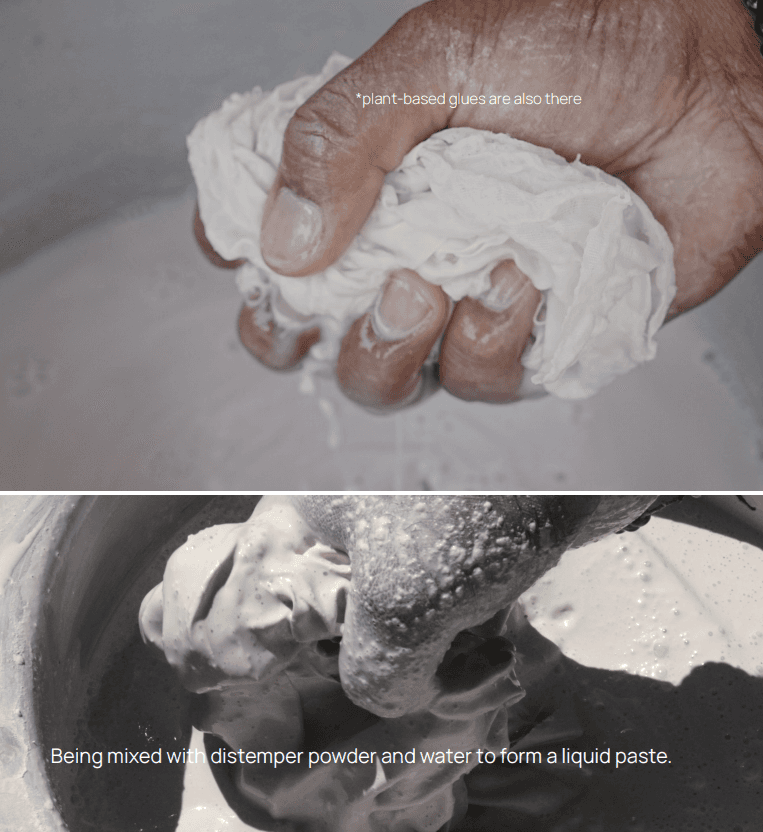
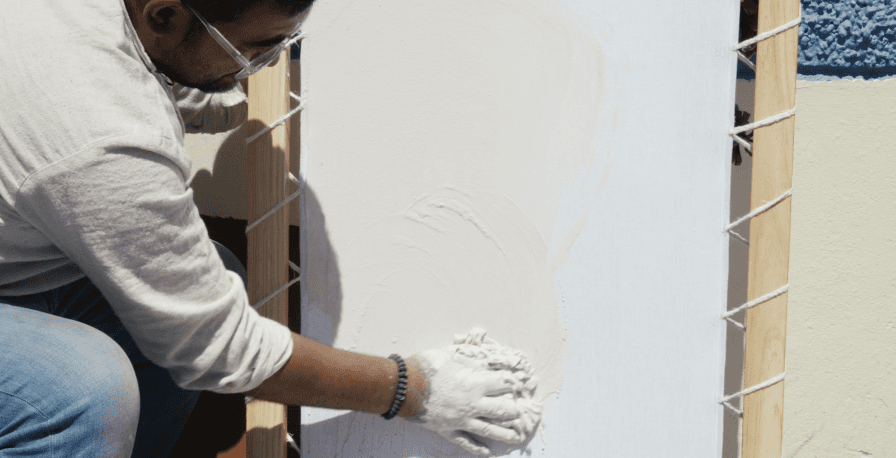
Gesso is applied properly on both sides of the canvas and let to dry in the sunlight.
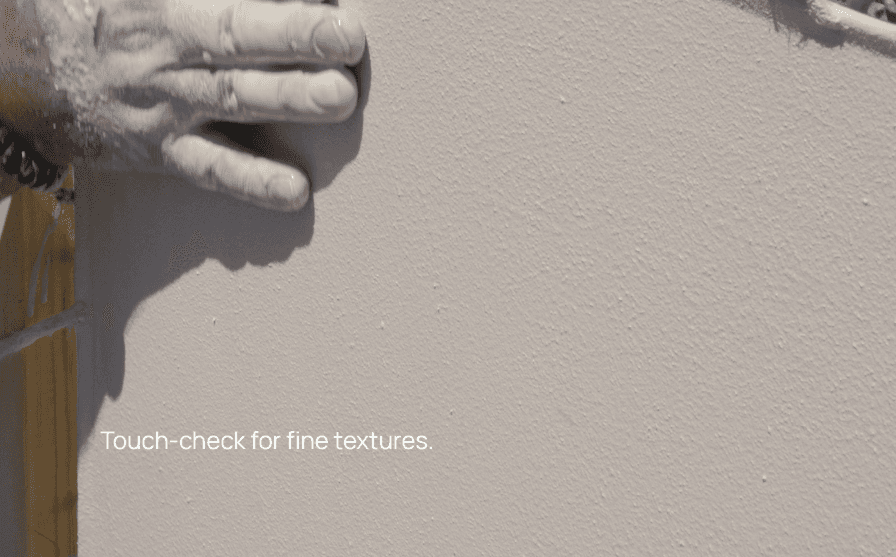
Smoothing and Polishing
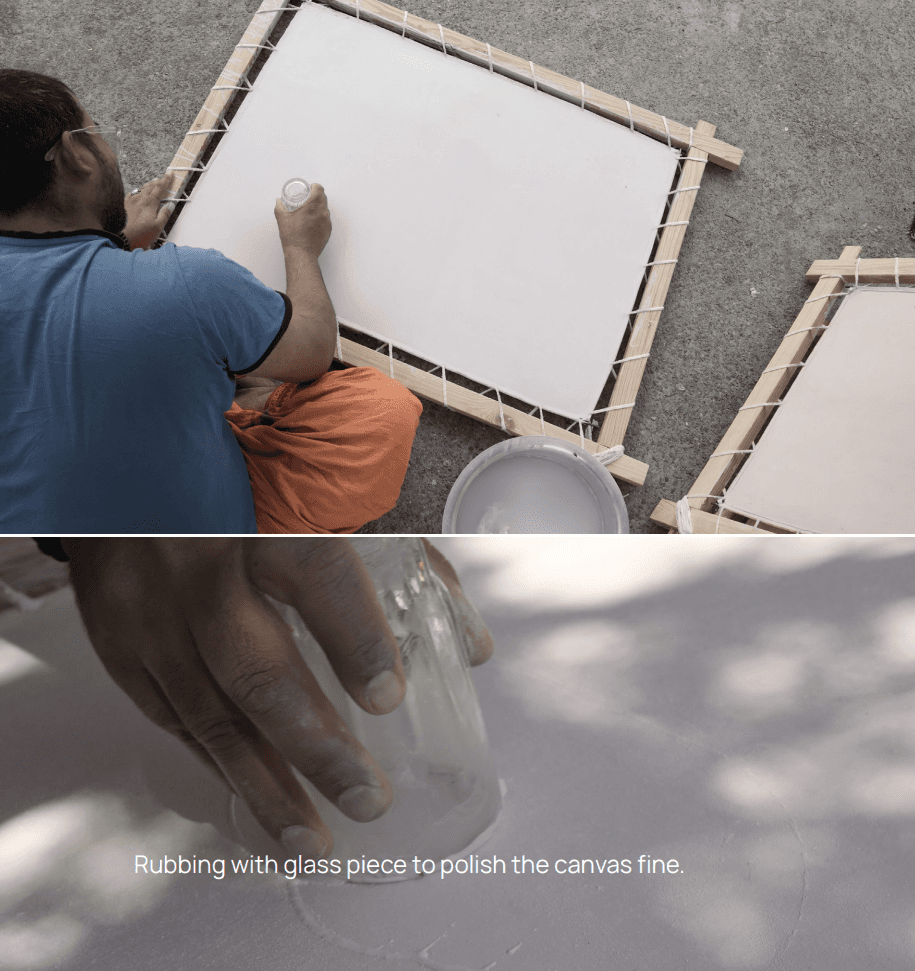
Once dry, the surface is scraped gently with a flat tool (smooth stone or rim of glass tumbler) to remove irregularities and is then polished with a smooth stone or glass implement
until it achieves a fine texture.
Colour Preparation
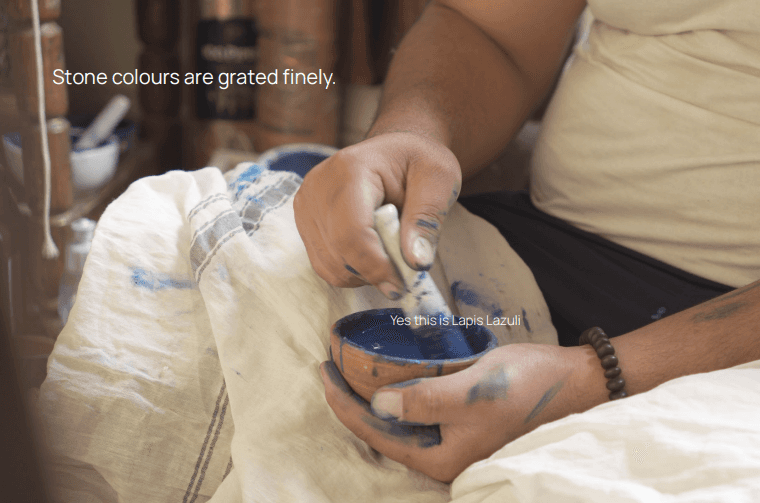
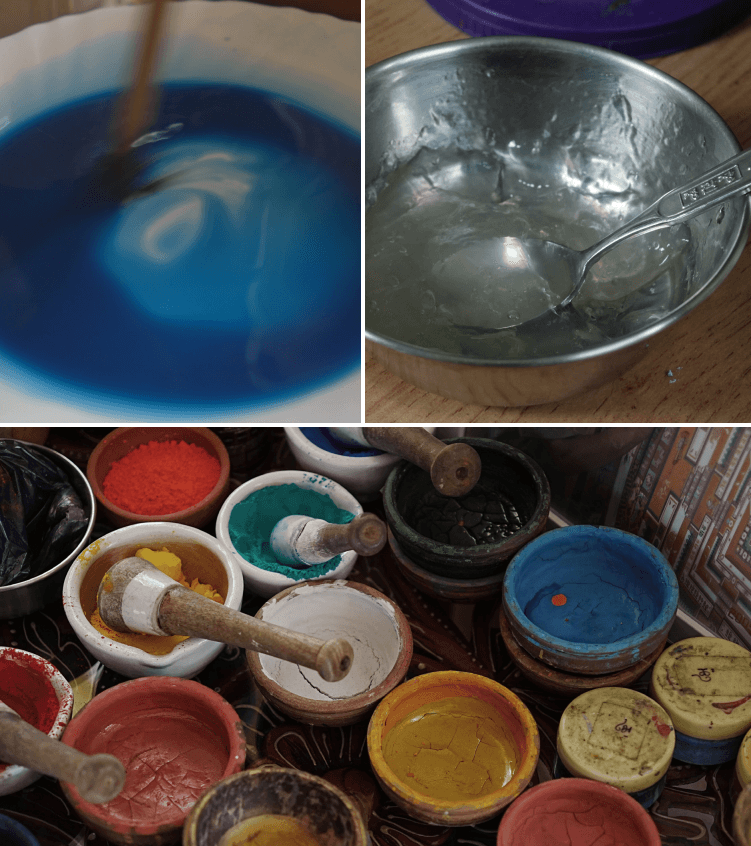
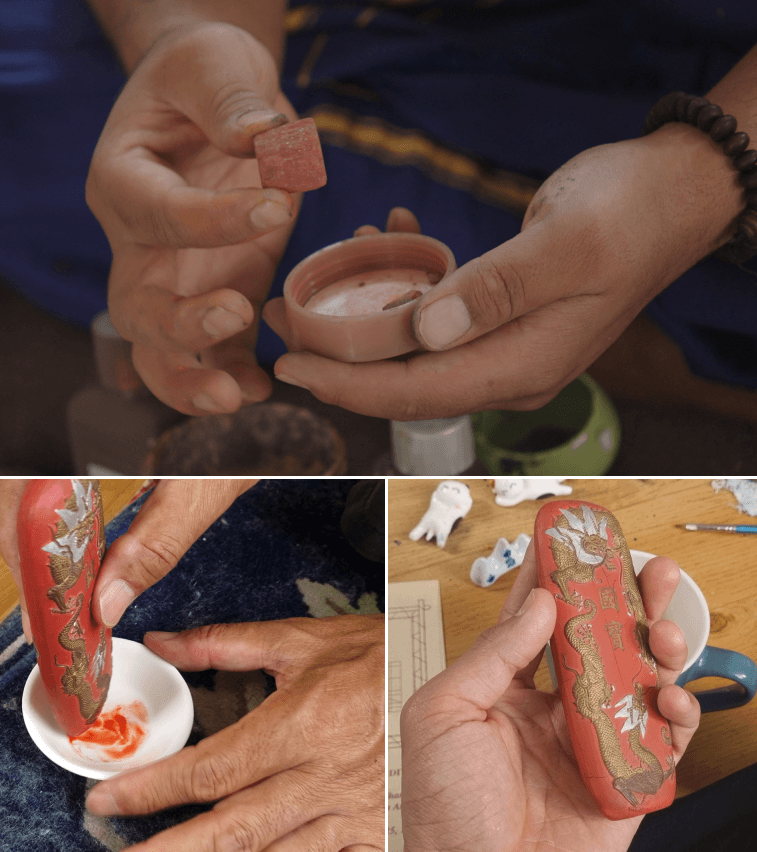
Objective: To produce durable, vibrant, and symbolically appropriate colors using natural pigments.
Drawing the Composition
Objective: To accurately lay out the visual structure based on sacred geometry and iconography.
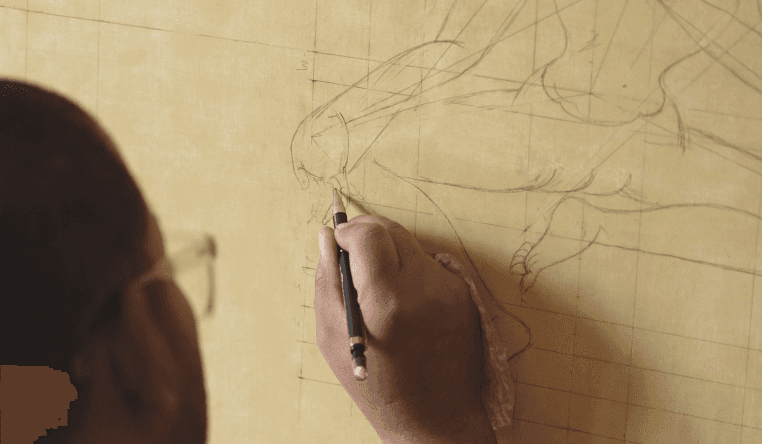
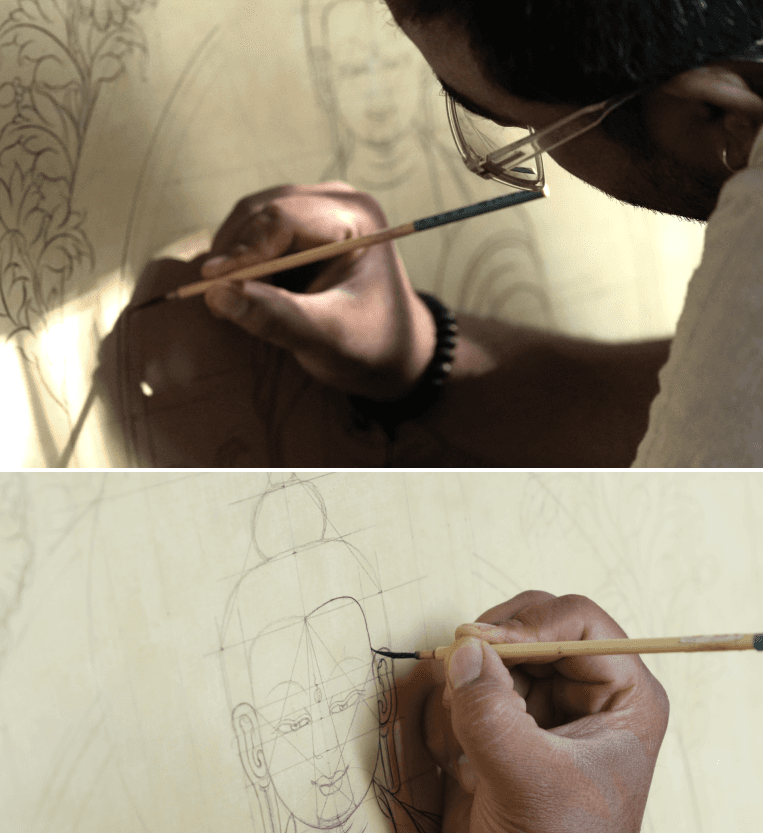
Establishing a Grid: Using a compass, ruler, and string, a geometrical grid is drawn to define the layout and scale of the
composition.